
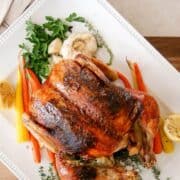
This herb-roasted chicken gets an overnight salt rub, a layer of garlic herb butter under the skin, and a lemon and a whole head of garlic stuffed right in the cavity so it comes out juicy with deeply golden, crispy skin.
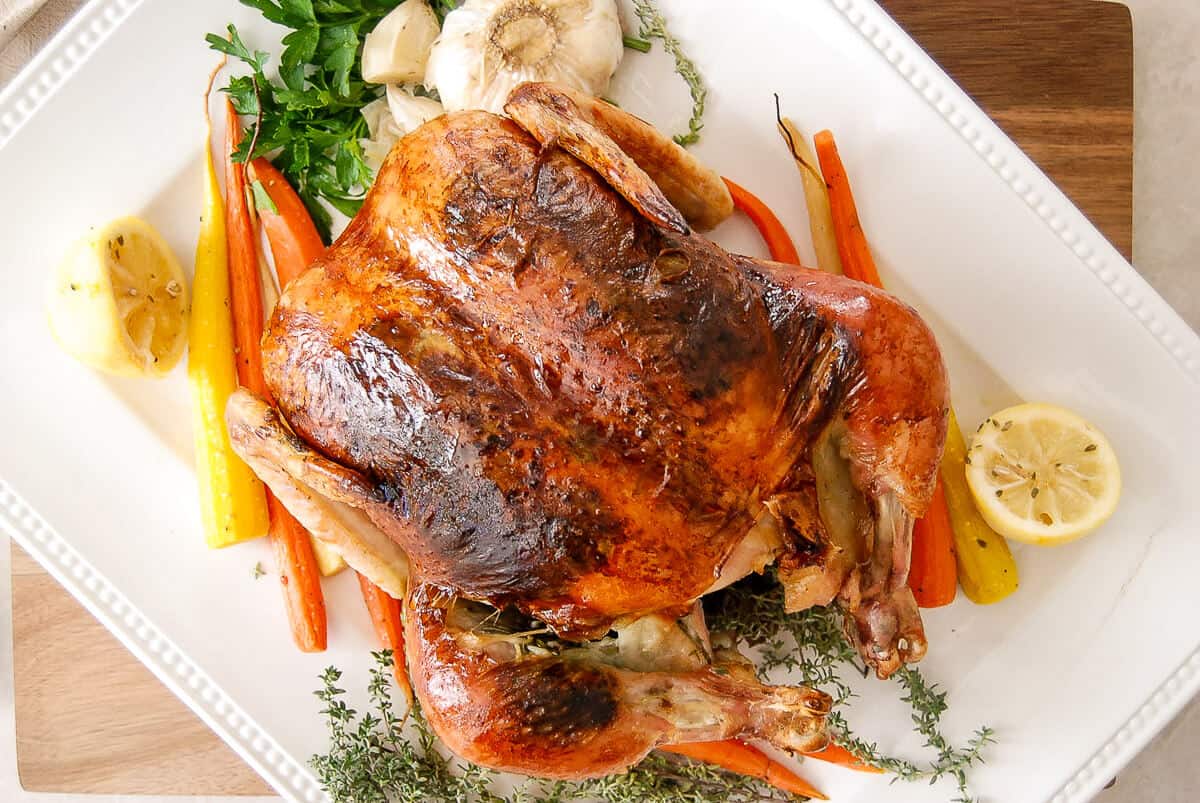
A Quick Look at the Recipe
👩🏻🍳 Recipe Name: Herb Roasted Chicken with Garlic Herb Butter
⏱️ Ready In: About 1 hour 50 minutes, plus at least 1 hour (ideally overnight) to dry brine.
🧑🧑🧒 Serves: 4-6
🍴Calories: ~410 (estimated)
🥣 Main Ingredients: whole chicken, butter, fresh thyme, rosemary, sage, and parsley, lemon, garlic
🍲 Flavor Profile: Savory and garlicky, with fresh herbs and bright lemon in every bite, crackly salted skin, and buttery pan juices from the roasted onions.
🎯 Difficulty: Easy
I love the holidays, especially Thanksgiving, but roasting a big turkey can feel like a lot. Enter this simple herb-roasted chicken. If you've never made a whole roasted chicken before, it may feel intimidating, but I promise you, it's one of the easiest dinners I make and is perfect for almost any situation (including the holidays!). The best trick I've learned, from one of my favorite cookbooks, Salt, Fat, Acid, Heat by the incredible Samin Nosrat, is to salt the bird well and early. I salt mine the day before and let it sit uncovered in the fridge, which does a couple of key things: it dries out the skin so that it becomes super crispy when roasted, and seasons the meat all the way through. Who knew salt could have such superpowers!
You could stop there, but this version goes a step further. A garlic herb butter goes under the skin, and lemon, garlic, and fresh herbs go in the cavity, so the whole thing tastes (and smells) amazing. We've made it for the holidays plenty of times, but it's just as at home on a summer table with crispy roasted potatoes and a big salad. If you haven't roasted a whole chicken, this is your sign to give it a try.
Why You'll Love This Recipe
- Juicy meat, crackly skin. The dry brine seasons the meat and dries the skin, and the herb butter bastes the breast from underneath as it roasts. You get tender, juicy chicken with skin that's browned and crisp.
- It's mostly hands-off. Prep takes about 20 minutes. After that, the oven does the work while you make the sides.
- A smaller holiday main. It has all the flavors of a holiday roast without the size or stress of a turkey, which makes it perfect for a smaller Thanksgiving or Christmas table.
- Nothing goes to waste. The onions and broth in the pan turn into buttery juices for spooning over the chicken, and the leftover bones make a great homemade stock.
Key Ingredients
The full ingredient list is in the recipe card below. A few things worth noting:
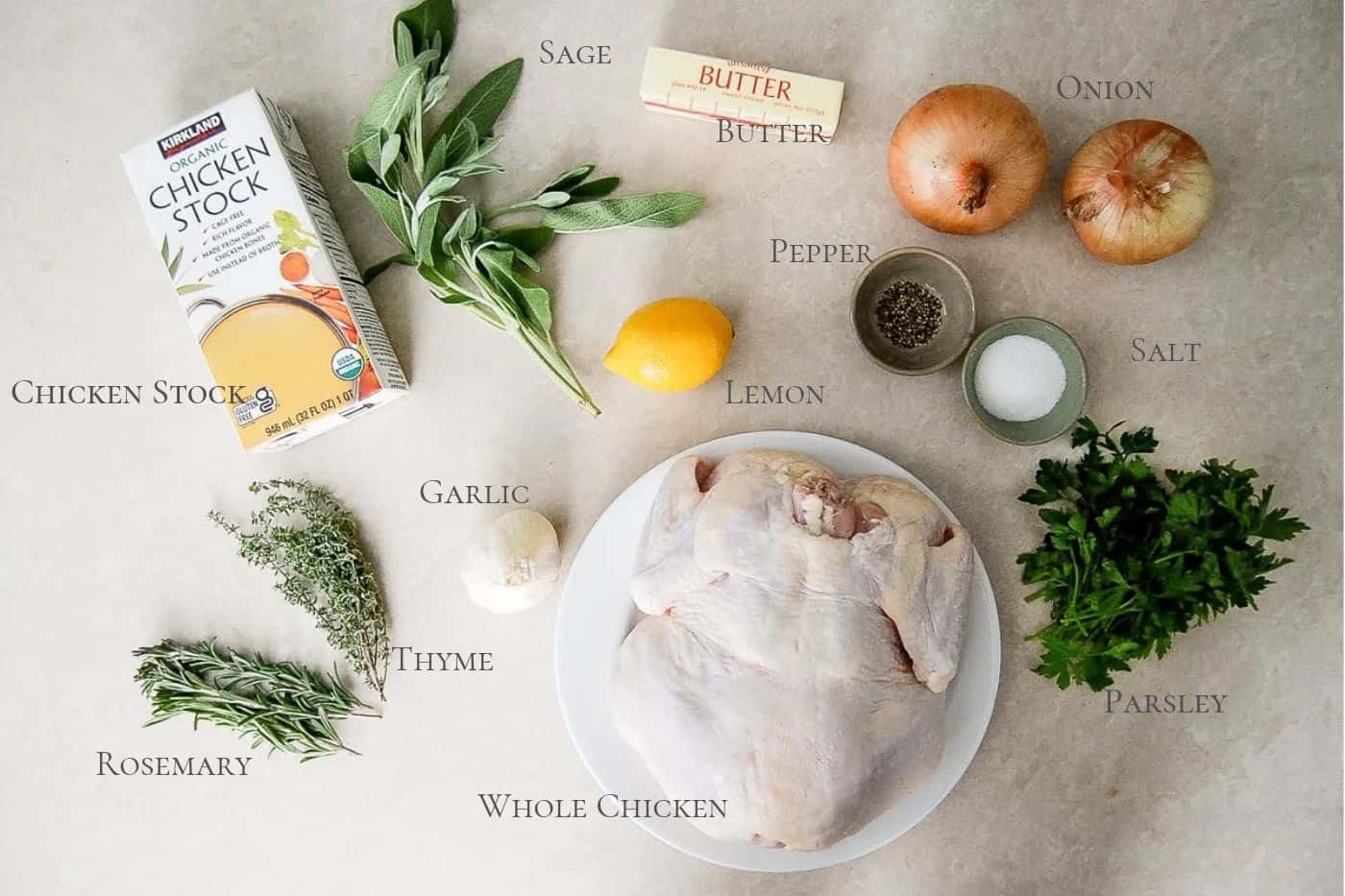
- Whole chicken. A 4.5 to 5-pound bird feeds four to six people and roasts in about 1 hour 15 minutes. Remove the giblets and pat it very dry before salting. (If you're wondering where to find the giblets, they're usually in a small plastic bag inside the cavity. Sometimes they've already been removed, or you can ask your butcher to take them out for you.)
- Kosher salt. This is the dry brine, and it's the most important step in the recipe (more on why it works below).
- Softened butter. Set the butter out ahead of time so it's soft enough to mash with the herbs and spread easily under the skin. Use unsalted butter. If you only have salted, leave the extra salt out of the herb butter.
- Fresh herbs. Thyme, rosemary, sage, and parsley go into the butter, with extra thyme and rosemary sprigs in the cavity. Fresh herbs definitely work best here, since they give the butter its flavor and color.
- Lemon. Zest it first for the herb butter, then halve it and tuck it into the cavity, where it steams and perfumes the meat as the chicken roasts.
- Garlic. You'll use grated garlic in the butter and a whole head, halved crosswise, in the cavity. No need to peel the halved head. Just pull off any loose, flaky skin and tuck it right in.
- Onions and chicken broth. Thick onion rounds act as a natural roasting rack, lifting the chicken off the bottom of the pan. With the broth, they become the base of the buttery pan juices.
How to Make Herb Roasted Chicken
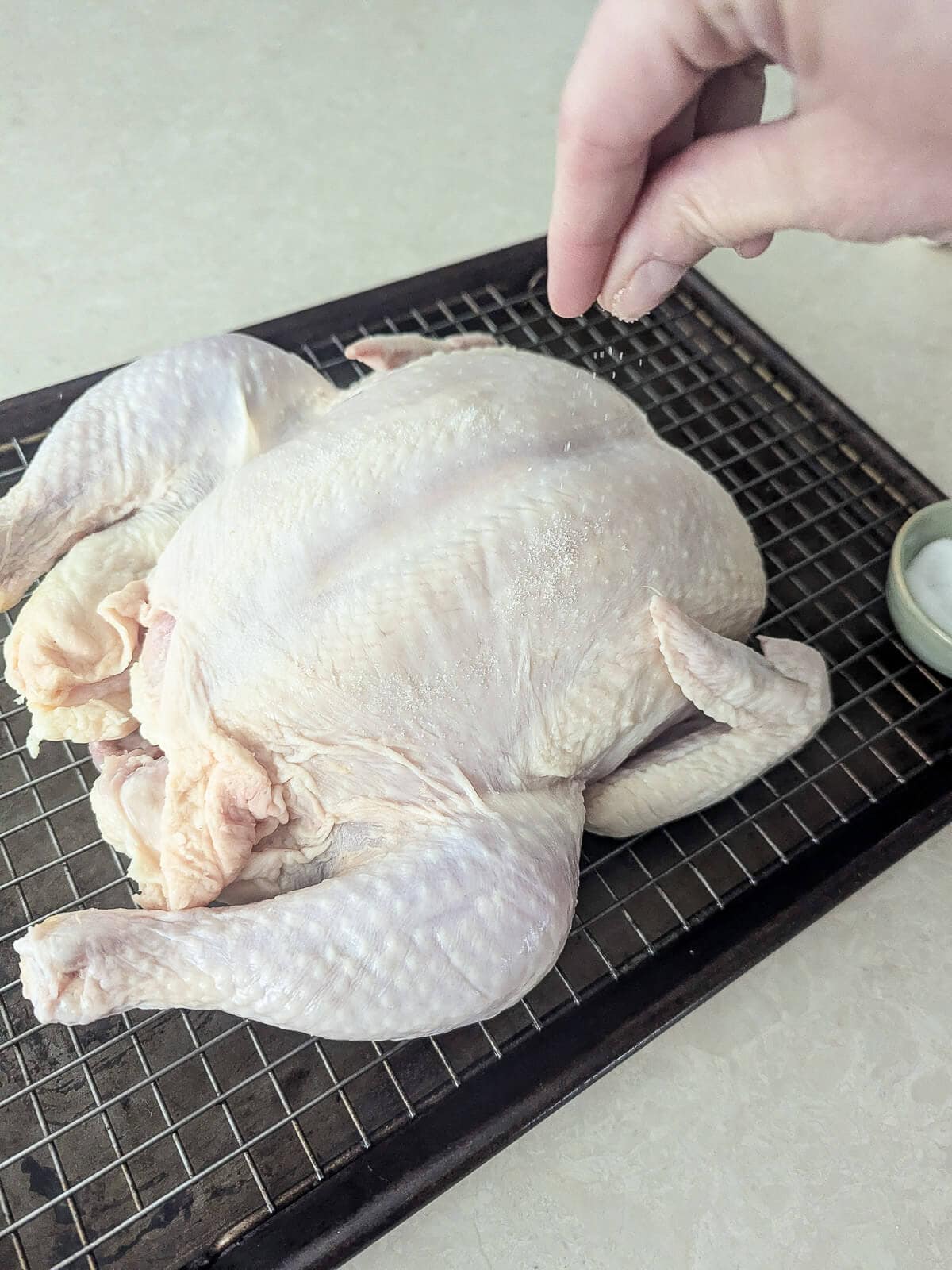
Step 1: Dry brine the chicken
Pat the chicken very dry inside and out with paper towels. Sprinkle the kosher salt all over, including inside the cavity. Set it on a rack set over a sheet pan and refrigerate, uncovered, for at least 1 hour and ideally overnight.
Step 2: Make the herb butter
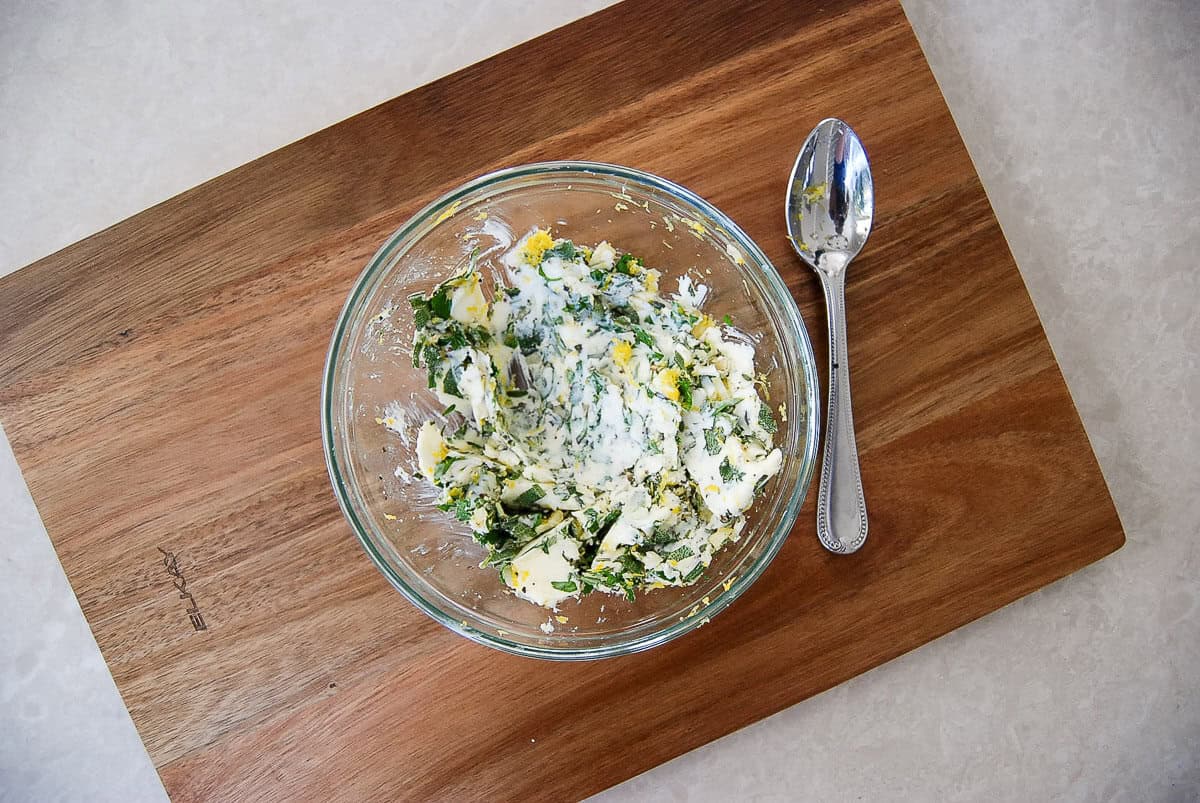
Take the chicken out of the fridge about 30 minutes before roasting and heat the oven to 425°F. In a small bowl, mash the softened butter with the grated garlic, thyme, rosemary, sage, parsley, lemon zest, salt, and pepper until evenly mixed.
Step 3: Butter the chicken under and over the skin
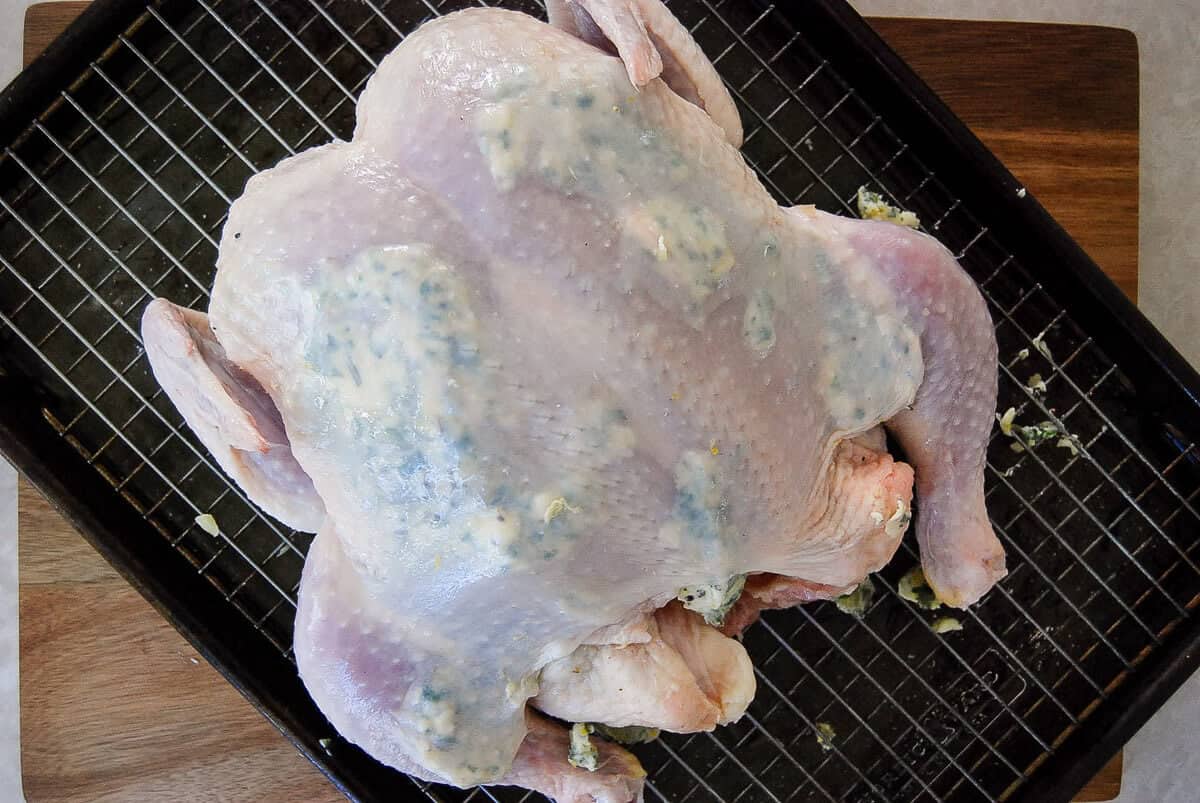
Gently slide your fingers under the skin of the breast and thighs to loosen it, taking care not to tear it. Push about two-thirds of the herb butter under the skin, then massage it from the outside to spread it evenly. Rub the rest of the butter all over the outside of the chicken. (As the butter warms, it may start to slide out from under the skin. Don't worry too much about it. Just push it back in as best you can before it goes into the oven.)
Step 4: Stuff, truss, and set the chicken on the onions
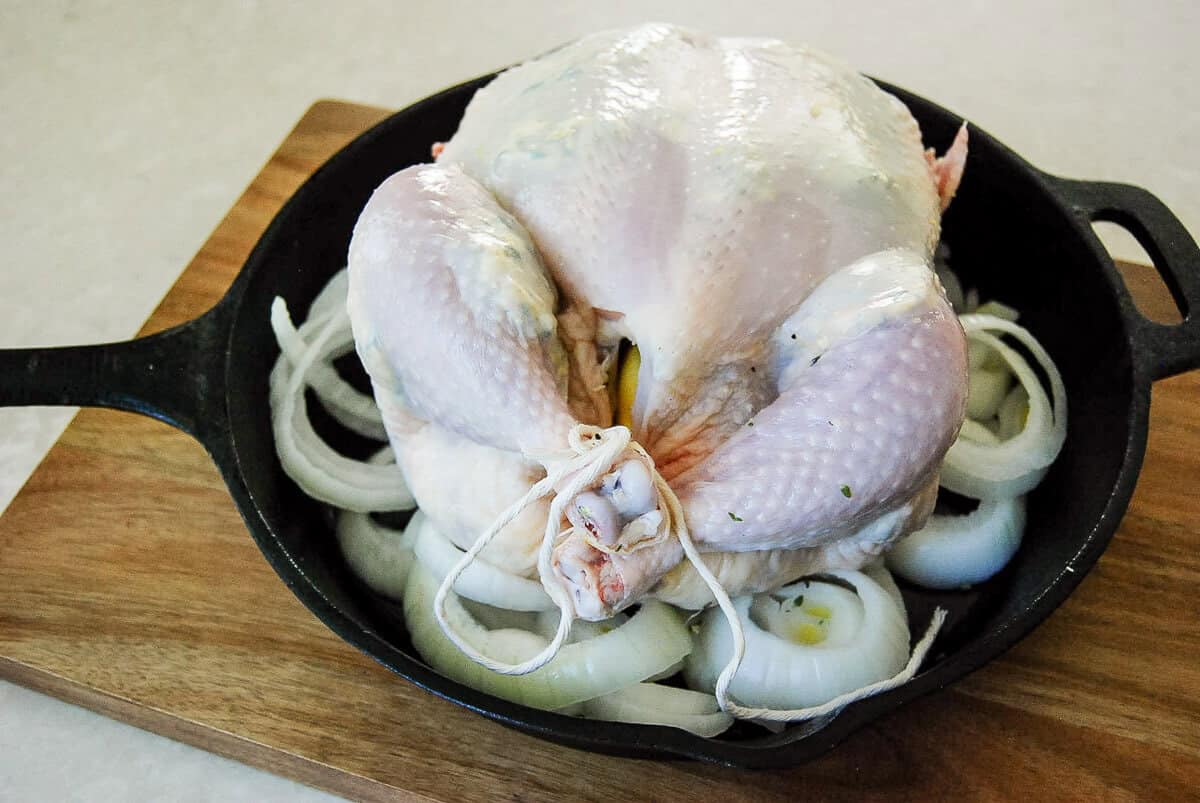
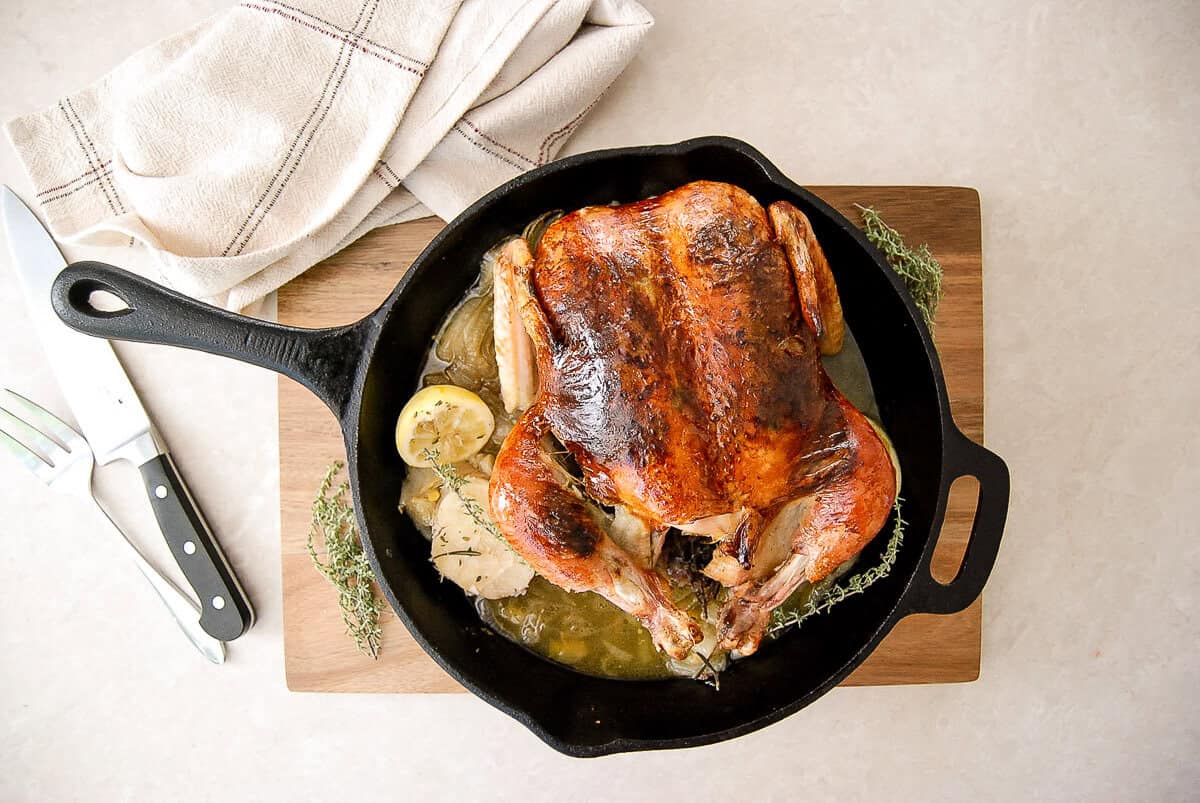
Spread the onion rounds in a cast iron skillet or roasting pan. Stuff the cavity with the lemon halves, the halved head of garlic, and the thyme and rosemary sprigs. Tie the legs together with kitchen twine and tuck the wing tips under. Set the chicken on the onions, breast side up, and pour the broth into the pan.
Step 5: Roast
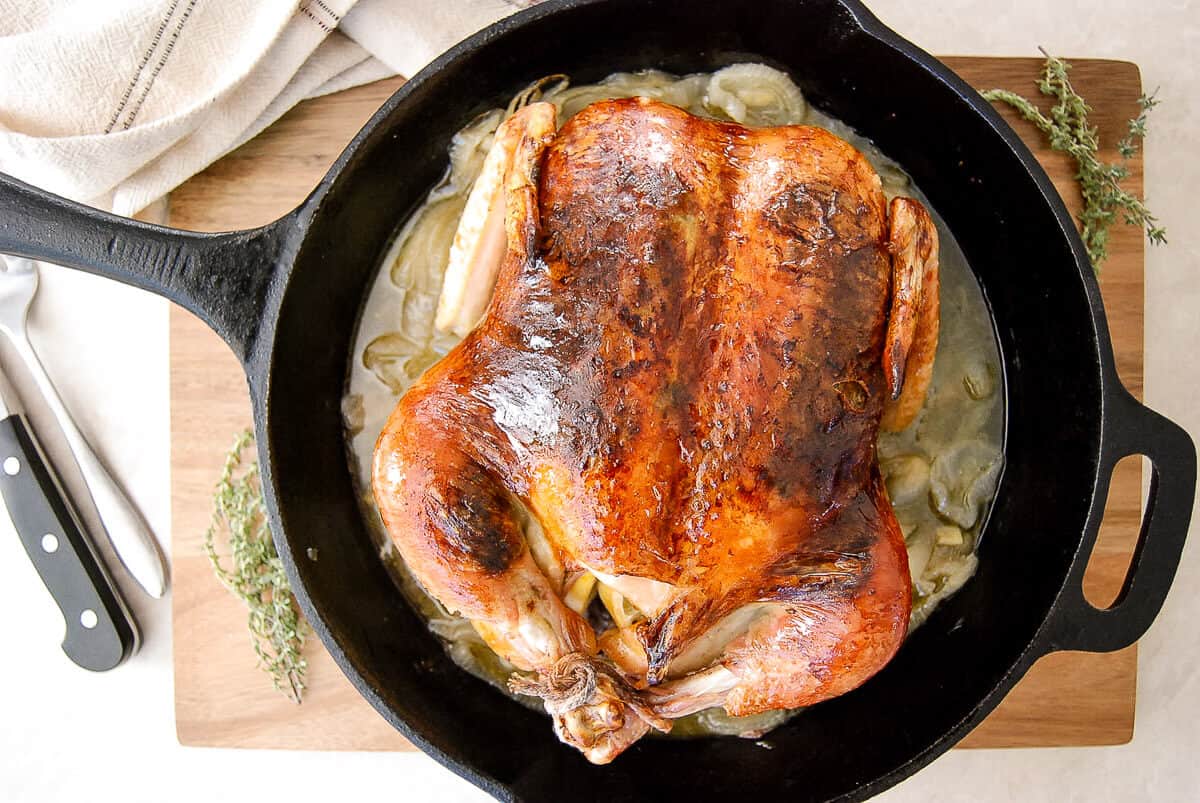
Roast for about 1 hour 15 minutes, roughly 15 minutes per pound, basting with the pan juices once or twice during the last 30 minutes. The chicken is done when the thickest part of the breast reads 160 to 165°F and the thigh reads 175°F on an instant-read thermometer. If the skin browns too quickly, tent the breast loosely with foil. If the pan looks dry, add a splash more broth.
Step 6: Rest, carve and serve
Let the chicken rest for 15 minutes so the juices settle back into the meat. Carve, then spoon the buttery pan juices over the top, or whisk them with a squeeze of the roasted lemon for a quick pan sauce.
Expert Tips for the Best Herb Roasted Chicken
- Salt early and keep the skin dry. The dry brine is the difference between okay skin and crackly skin. Pat the chicken dry before salting and leave it uncovered in the fridge overnight if you can. Moisture on the skin turns to steam in the oven and keeps it from crisping.
- Use a thermometer. Cooking times vary with the size of the bird and your oven. An instant-read thermometer in the thickest part of the breast and thigh is the only reliable way to know it's done without overcooking it.
- Watch the pan at high altitude. Here at about 5,400 feet, the roasting time barely changes, but the liquid in the pan evaporates a lot faster. Check it halfway through and add a splash of broth if the onions start to scorch.
- Don't skip the rest. Fifteen minutes on the counter keeps the juices in the meat instead of on the cutting board.
How Long to Roast a Whole Chicken at 425°F
A whole chicken takes about 15 minutes per pound at 425°F, so a 4.5 to 5 pound chicken needs about 1 hour 10 minutes to 1 hour 20 minutes. Start checking the temperature at 1 hour. Smaller birds will be done sooner and larger ones will need more time, so go by temperature rather than the clock.
What Temperature Is Roast Chicken Done?
Roast chicken is done when the thickest part of the breast reaches 165°F and the thigh reaches about 175°F. Pulling it from the oven when the breast reads 160 to 165°F is fine, since the temperature keeps rising a few degrees as it rests. Thigh meat is more tender at the higher temperature.
Why Dry Brine a Chicken?
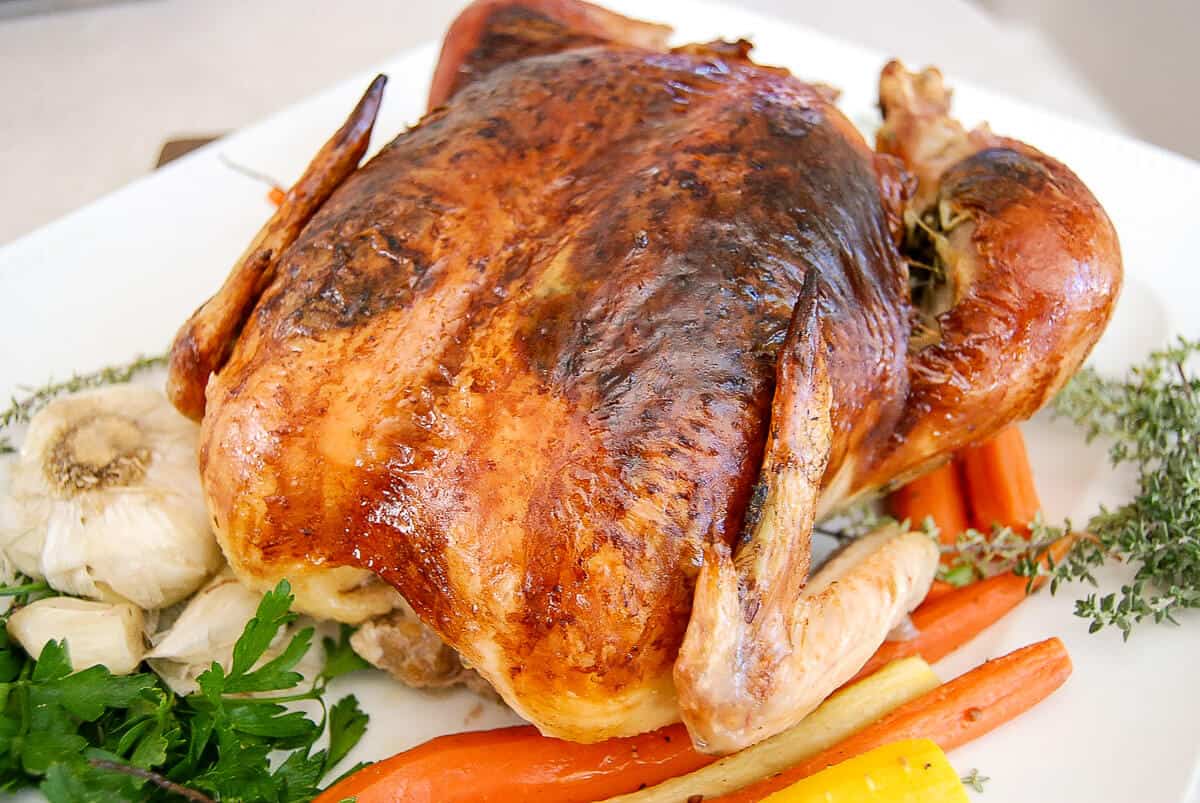
Dry brining means salting the chicken and letting it rest uncovered in the fridge before cooking. The salt seasons the meat all the way through and helps it hold on to its juices, and the cold air dries out the skin so it browns and crisps in the oven. It takes just a minute of work, and overnight gives the best results, but even an hour helps. If you're really short on time, you can salt it right before the herb butter goes on and roast as directed. The skin just won't get quite as crisp.
Variations and Substitutions
- Salted butter. If you're using salted butter, leave the 1 teaspoon of salt out of the herb butter.
- Dried herbs. Fresh herbs give the best flavor, but in a pinch use about one-third as much dried thyme, rosemary, and sage. Keep the parsley fresh if you can.
- Different herbs. Swap in whatever you have. Oregano, chives or tarragon all work in the butter.
- Shallots instead of onions. Use four halved shallots in place of the onion rounds for a slightly sweeter, more delicate pan sauce.
- Roast vegetables in the pan. Add halved baby potatoes or carrots around the chicken for an easy one-pan dinner. You may need a little more broth, and crowding the pan will slow the browning.
Make Ahead, Storage and Freezing
- Make ahead. Salt the chicken up to 24 hours ahead and keep it uncovered in the fridge. The herb butter can be made up to 5 days ahead and refrigerated. Let it soften at room temperature before using.
- Make extra herb butter. Double the batch and use the rest on Thanksgiving sides, mashed potatoes, and warm rolls. It also freezes well for up to 3 months.
- Storage. Store leftover chicken in an airtight container in the fridge for up to 4 days.
- Freezing. Pull the meat off the bones and freeze it in freezer bags for up to 3 months. Thaw overnight in the fridge.
- Reheating. Warm leftovers in a covered dish at 325°F with a spoonful of the pan juices or broth until heated through, or use the meat cold in salads and sandwiches.
- Save the bones. Simmer the carcass with water, an onion, carrots, and celery for an easy homemade chicken stock.
Frequently Asked Questions
No. Rinsing raw chicken spreads bacteria around your sink and kitchen, and the oven heat kills any bacteria on the chicken. Just pat it dry with paper towels.
No. Roast it uncovered so the skin can brown and crisp. If the breast browns too quickly before the chicken is cooked through, tent it loosely with foil for the rest of the cooking time.
Yes. A 12-inch cast iron skillet holds a 4.5 to 5-pound chicken well, and the heavy pan helps brown the bottom and the onions underneath. A roasting pan or a 9x13 baking dish also works.
Yep! Triple the herb butter for a 12- to 14-pound turkey and spread it under the skin the same way. The roasting time and temperature will be different, so follow a turkey-specific guide for those.
What to Serve With Herb Roasted Chicken
One of the best things about a roasted chicken is that it really pairs with almost anything. Here are a few ideas that always work for me (don't forget a crisp glass of white wine, which goes perfectly with this chicken!).
- Maple-glazed carrots. Sweet, glossy carrots are a natural match for the savory herb butter, and they look beautiful on the platter next to the chicken.
- Boursin mashed potatoes. These creamy, cheesy mashed potatoes are perfect for catching the buttery pan juices.
- Roasted asparagus. Bright, lemony roasted asparagus with Parmesan roasts at the same temperature, so it can go in while the chicken rests.
- Garlic green beans. Green beans with almonds and garlic are quick and easy and add a little crunch.
- A big fall salad. This autumn kale salad or a pear, arugula, and goat cheese salad keeps the meal from feeling too heavy.
- Crusty bread. A loaf of no-knead rosemary Parmesan bread is perfect for soaking up every bit of the pan juices.
For more holiday ideas, these easy holiday side dishes all pair well with this chicken.
More Chicken Recipes



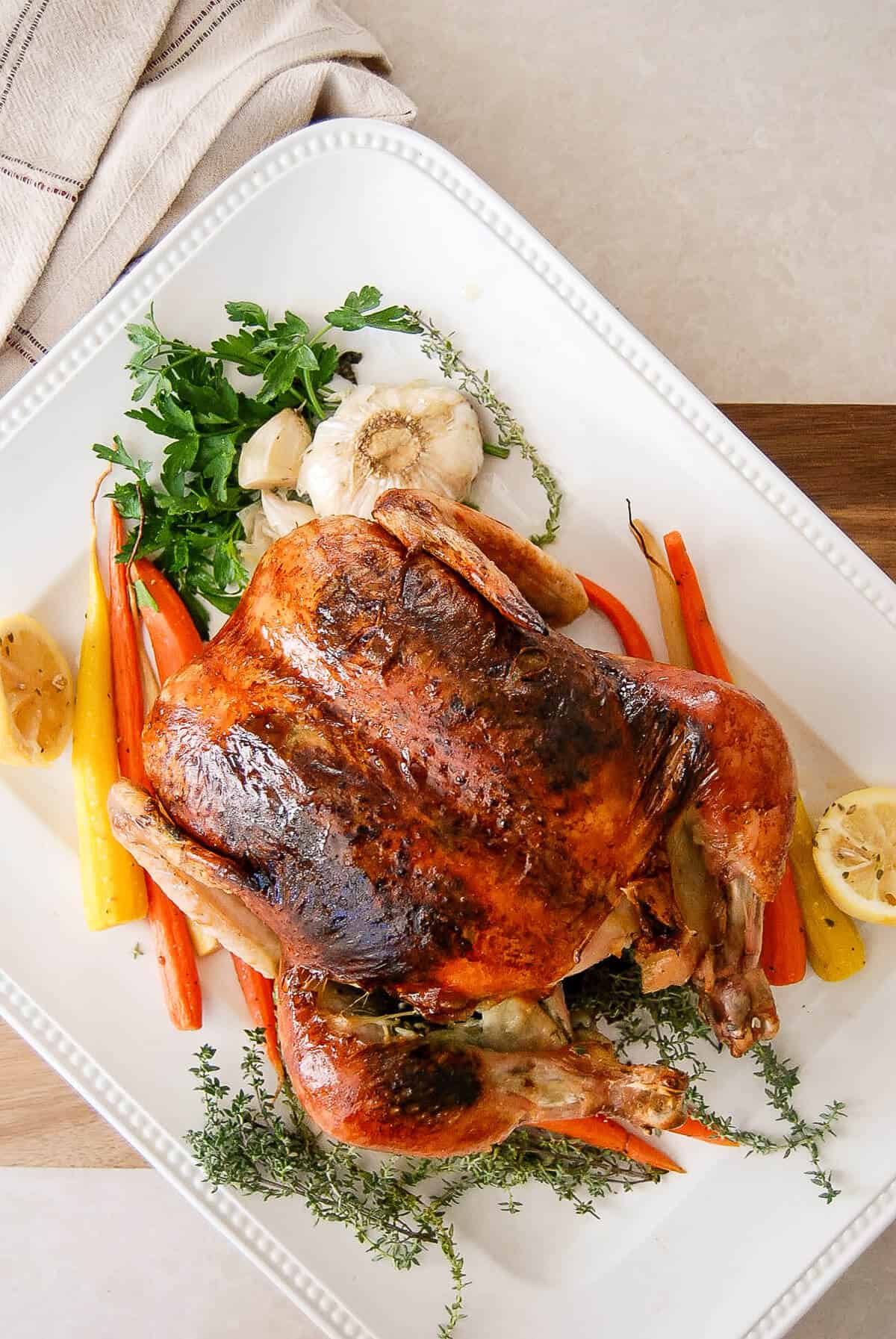
If this herb roasted chicken ends up on your holiday table (or your Tuesday one), I'd love to hear about it. Leave a star rating and a quick comment below. It helps other readers learn about the recipe and feel confident trying their first whole roasted chicken!
Recipe
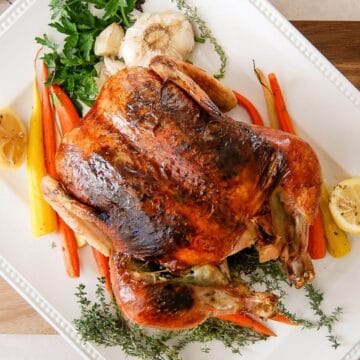
Herb Roasted Chicken with Garlic Herb Butter
Ingredients
For the chicken
- 1 whole chicken (4.5 to 5 lb, giblets removed)
- 2 teaspoon salt
- 1 lemon zested first, then halved - the zest goes in the herb butter)
- 1 head garlic halved crosswise
- 3 sprigs fresh rosemary
- 3 sprigs fresh thyme
- 2 yellow onions cut into thick rounds
- ½ cup low-sodium chicken broth or stock, plus more if the pan gets dry
For the herb butter
- 6 tbsp unsalted butter softened
- 3 cloves garlic finely grated
- 1 tbsp fresh thyme leaves finely chopped
- 1 tablespoon fresh sage finely chopped
- 2 tablespoon fresh parsley finely chopped
- lemon zest from the lemon used with the chicken above
- 1 teaspoon salt
- ½ teaspoon black pepper
Instructions
- Dry brine the chicken. Pat the chicken very dry inside and out. Sprinkle the 2 teaspoon salt all over, including the cavity. Set on a rack in the fridge, uncovered, for at least 1 hour, ideally overnight. Take it out 30 minutes before roasting.
- Heat the oven to 425°F. Make the herb butter by mashing the butter, garlic, thyme, rosemary, sage, parsley, lemon zest, salt and pepper together in a small bowl.
- Loosen the skin over the breast and thighs with your fingers. Push about two-thirds of the herb butter under the skin and massage it around from the outside. Rub the rest over the outside of the chicken.
- Stuff the cavity with the lemon halves, halved garlic head and herb sprigs. Tie the legs together with kitchen twine and tuck the wing tips under.
- Spread the onion rounds in a cast iron skillet or roasting pan. Set the chicken on top, breast side up, and pour the broth into the pan.
- Roast for about 1 hour 15 minutes (roughly 15 minutes per pound), basting once or twice during the last 30 minutes, until the thickest part of the breast reads 160 to 165°F and the thigh reads 175°F. If the skin browns too fast, tent the breast loosely with foil. If the pan goes dry, add a splash more broth.
- Rest for 15 minutes before carving. Spoon the buttery pan juices over the carved chicken, or whisk them with a squeeze of the roasted lemon for a quick pan sauce.
Notes
- Salt the chicken as early as you can, ideally the day before. Overnight gives the crispiest skin, but even 1 hour helps.
- Leave the chicken uncovered in the fridge while it brines so the skin dries out.
- Set the butter out ahead so it's very soft. Cold butter will tear the skin.
- Fresh herbs work best. If you must use dried, use about one-third as much.
- If you're using salted butter, leave out the 1 teaspoon salt in the herb butter.
- There's no need to peel the halved garlic head. Just remove any loose, flaky skin.
- Go by temperature, not time. Larger or smaller chickens will take more or less time.
- At high altitude, the pan liquid evaporates faster. Check it halfway through and add more broth as needed.
- Double the herb butter and save the extra for mashed potatoes, rolls or holiday sides.
Explore More with AI




Comments
No Comments